- NSIB opens probe into Challenger 604 door separation incident
- Private jet forced into emergency landing in Abuja after door detaches
- NAMA spokesman, Musa honoured with prestigious 'Dan Kade of Kontagora' title
- The sky has no gender
- Surging revenues, strong balance sheet drive United Nigeria’s pioneer ₦100bn debt programme



Walsh: Airfare rises ‘inevitable’ as Nigeria, global airlines face extra $100bn jet fuel bill
Wole Shadare, Rio de Janeiro, Brazil
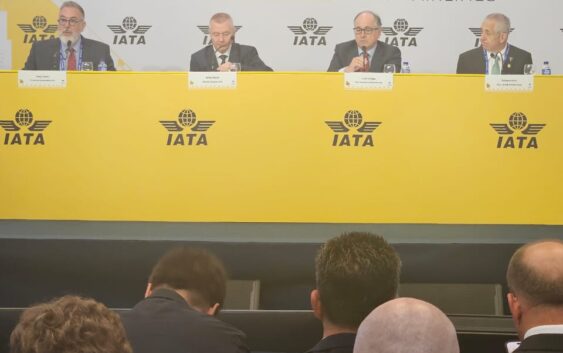
The Director-General of International Air Transport Association (IATA), Willie Walsh, said global airlines, including Nigerian carriers, will have to spend an extra $100bn on jet fuel this year, with fares inevitably rising to cover the bill after the war with Iran choked off oil supplies.

Walsh, while fielding questions from journalists at the end of the 82nd IATA Annual General Meeting (AGM) and World Transport Summit in Rio de Janeiro, Brazil, on Monday, said that with jet fuel prices expected to be 70% higher across 2026, collective industry profits worldwide would halve to $23bn.
 Walsh
Walsh
Some carriers, he said, would struggle to survive the fuel price shock caused by the closure of the Strait of Hormuz in March.
He noted that the specific vulnerability of markets like Nigeria highlights why this crisis hits developing aviation sectors with double jeopardy.
Walsh noted that airlines are doing their best to absorb the initial shocks, but said that when fuel accounts for over half of all ticket revenue, operators are left with only two choices: raise fares or ground the fleet.
The escalating geopolitical crisis in the Middle East has sent shockwaves through the global aviation sector, and Nigeria’s air transport market is bearing the brunt.
Aviation fuel typically accounts for 30% to 40% of a Nigerian airline’s operating costs. With the Middle East crisis throttling supply lines and spiking crude prices, fuel costs have quickly risen to 45%-55% of airline revenues.
At current rates, domestic operators are burning through cash just to keep planes in the sky. Industry executives warn that airlines are heavily absorbing these losses, but their balance sheets are at a breaking point.
In early 2026, Jet A1 prices were around ₦940-₦980 per litre. Following the outbreak of wider hostilities, prices surged to ₦1,500, and have recently been quoted as high as ₦2,500 to ₦3,300 per litre depending on the airport and region (with northern airports like Sokoto and Kano seeing the highest spikes due to logistics).
While domestic one-way tickets have been averaging ₦92,000 to ₦150,000, depending on the route and booking window, insiders indicate that if the fuel crisis persists, baseline fares will need to be raised to ₦185,000 to ₦200,000 just to break even.
Given the pressure from the Federal Competition and Consumer Protection Commission (FCCPC) regarding consumer pricing, domestic airlines are trapped in an incredibly tight regulatory and economic vice.
With global crude oil prices breaching the $100 per barrel mark, the price of Jet A1 (aviation fuel) has skyrocketed, making severe domestic airfare hikes practically unavoidable.
Until recently, despite being a powerhouse crude oil producer, Nigeria lacked domestic refining infrastructure for aviation fuel (Jet A-1). Virtually all aviation fuel must be imported.
Unlike larger international legacy carriers that can lean on hedging or premium-class corporate traffic to absorb shocks, Nigerian domestic airlines are immediately exposed.
Fares must spike aggressively and instantly just to cover the bare operating cost of a flight, threatening to price out everyday domestic travellers entirely.
“High oil prices will inevitably mean higher ticket prices. There’s just no way to avoid it” said Willie Walsh.
Walsh said industry polling showed passengers were now braced for higher fares and prepared to spend more, but added: “The big unknown is how long travellers and shippers can tolerate the higher costs of connectivity.”
“It was a “challenging and unpredictable time”, with “wafer-thin margins. It’s going to be very challenging, and for a lot of airlines the increase in the fuel bill is potentially existential.”
But Walsh said that concerns about possible fuel shortages were now over, despite the soaring costs, and compared with Covid, it was not a crisis.

“You’re looking at an industry that is still profitable and still forecasting growth,” said Walsh. “Traffic is up 2%. If you factor out the impact on the Middle East for the rest of the world, it remains a pretty positive environment.”
Google+